






Like a Cat Loves a Bird, The Nine Lives of Muriel Spark
James Bailey's new biography
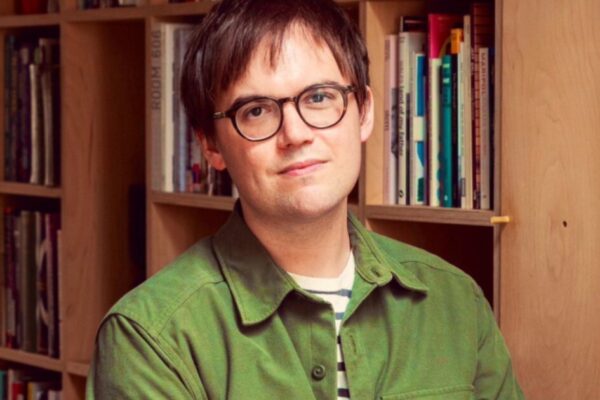
Muriel Spark was endlessly fascinating as a person as well as an author. To mark the 20th anniversary of her death, James Bailey’s new biography Like a Cat Loves a Bird, offers a fresh perspective praised as being as sharp-witted and mischievous as Spark herself. We asked him a little about the book and the woman.
Image credit: Marc Provins
What first ignited your interest in Muriel Spark?
Her sense of unpredictability. As a teenager, I remember seeing a number of her books on a shelf in my local library – all thin spines, with cosy-looking covers and titles like A Far Cry from Kensington and The Bachelors - and thinking that they seemed a nice enough way to pass the time. I obviously had no idea of what awaited me in those books: violence, deception, jealousy, all relayed with a kind of arch playfulness. I was intrigued, too, by how prolific Spark was, and how varied her books are. We’ll get a social comedy followed by a thriller and then a ghost story. Spark talked about writing as surrendering to her own “queer dictatorial sense”, and you really see that when you go from one wildly adventurous book to the next.
What period of her life do you find most fascinating?
Her time in Rome, definitely. Following the success of The Prime of Miss Jean Brodie, and its successful film adaptation, Spark was able to live large. She rented an apartment in a former palace, threw lavish parties, and wore green evening gowns to match the colour of the crème de menthe she served her guests. But it was also a lonely time, during which she became fascinated by crime stories and themes of voyeurism and alienation. It all led to her pitch-black masterpiece, The Driver’s Seat. Evoking this period in Spark’s life and career was one of the highlights of writing the book (although I gave myself the creeps in the process).
Do you think you would have liked her as a person?
Hoping to like Spark was never a concern of mine in writing this book, and I’d like to think that would apply to the flesh and blood author. We know that Spark could be a flinty, mercurial presence; one of her colleagues at the New Yorker once said that she went through friends like pieces of Kleenex. But she was also a survivor, and many of the more ruthless decisions she made were designed to protect her peace as a writer, and to keep creative stagnancy at bay. There’s a chapter in the book called “The Intellectual Monster”, which looks at Spark’s relationship with her public image, and her own interest in presenting “unlikeable” female characters.
She famously disliked pretty much anything that was written about her life (especially the Stannard biography) - what do you think she'd have made of your book?
If she didn’t like Stannard’s biography, which she originally commissioned and supported with interviews and access to her personal archives, then I very much doubt she’d have liked mine or anyone else’s! I do feel, however, that humour is often lacking from accounts of Spark’s life, and I’d like to think that the attention my book gives to her sense of mischief, her eccentricities and her writerly superstitions would have raised a smile. Although that’s perhaps wishful thinking…
What is/are your favourite Spark novels?
For its daring and starkness, it’s perhaps The Driver’s Seat. But I also love the sheer cheek of a book like 1960’s The Ballad of Peckham Rye, in which Spark subverts the “kitchen sink” realism of the day through the intervention of one of her most charismatic characters, the devilish Dougal Douglas. And for an underrated gem, perhaps look at The Public Image. It was written during Spark’s Rome years, and looks at celebrity, artifice and narcissism; its relevance to our present moment, where social media has become the site of our own self-fashioning, is remarkable.
What was the hardest and the most fun bit of researching the book?
The answer to both is Spark’s slipperiness. Spark was, and remains, a contradictory, confounding presence. In her work and in her life, she was a shapeshifter. Deciding not to concern myself with solving the “puzzle” of Spark, but to live instead with her elusiveness, allowed me to have a lot of fun with the idea of presenting many Muriels, rather than a single portrait of the artist.
You can buy tickets for James Bailey's event on Saturday 3rd October on our website.
